The Battle of the Bulge
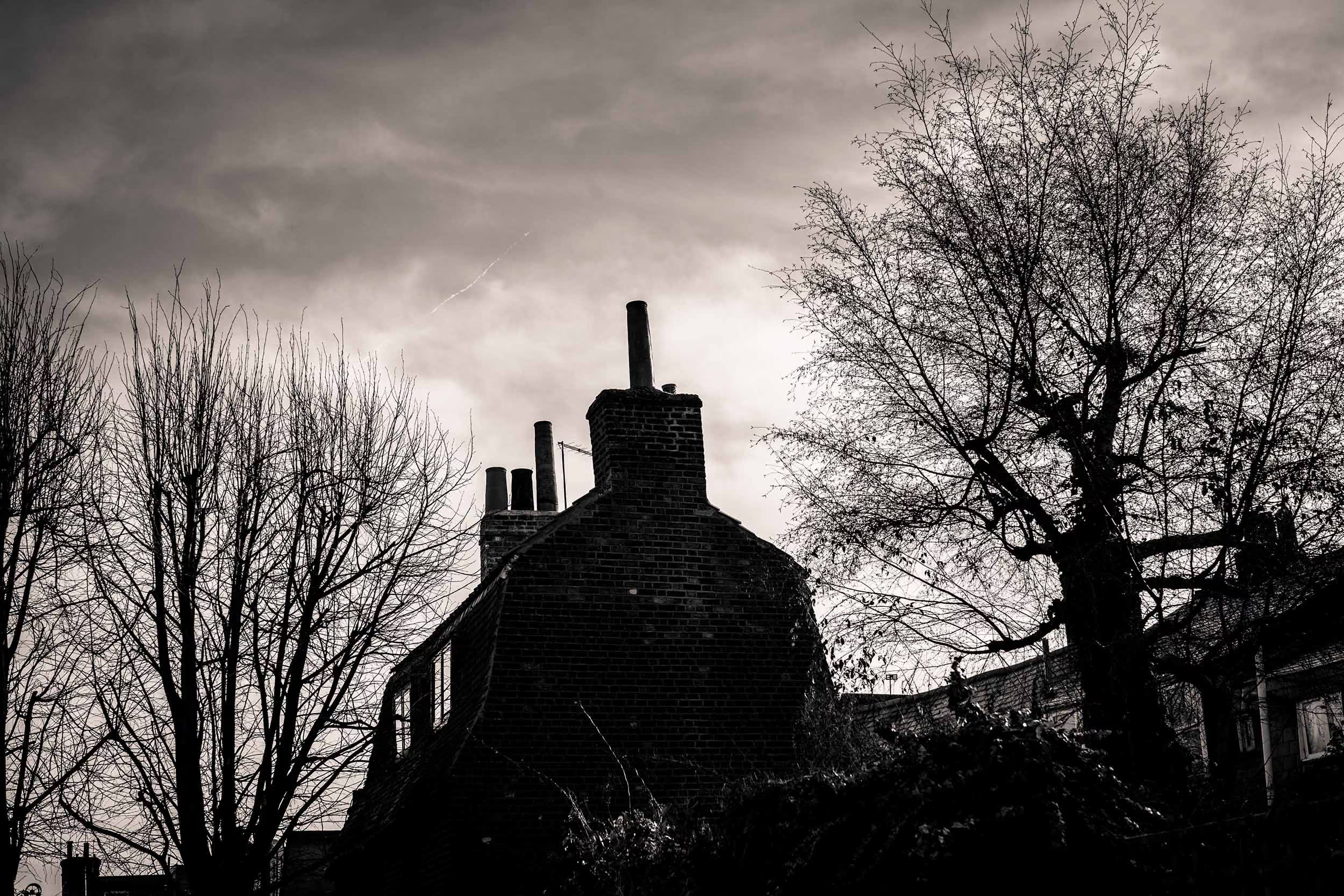
The Shepherd’s Cottage
Highgate, London
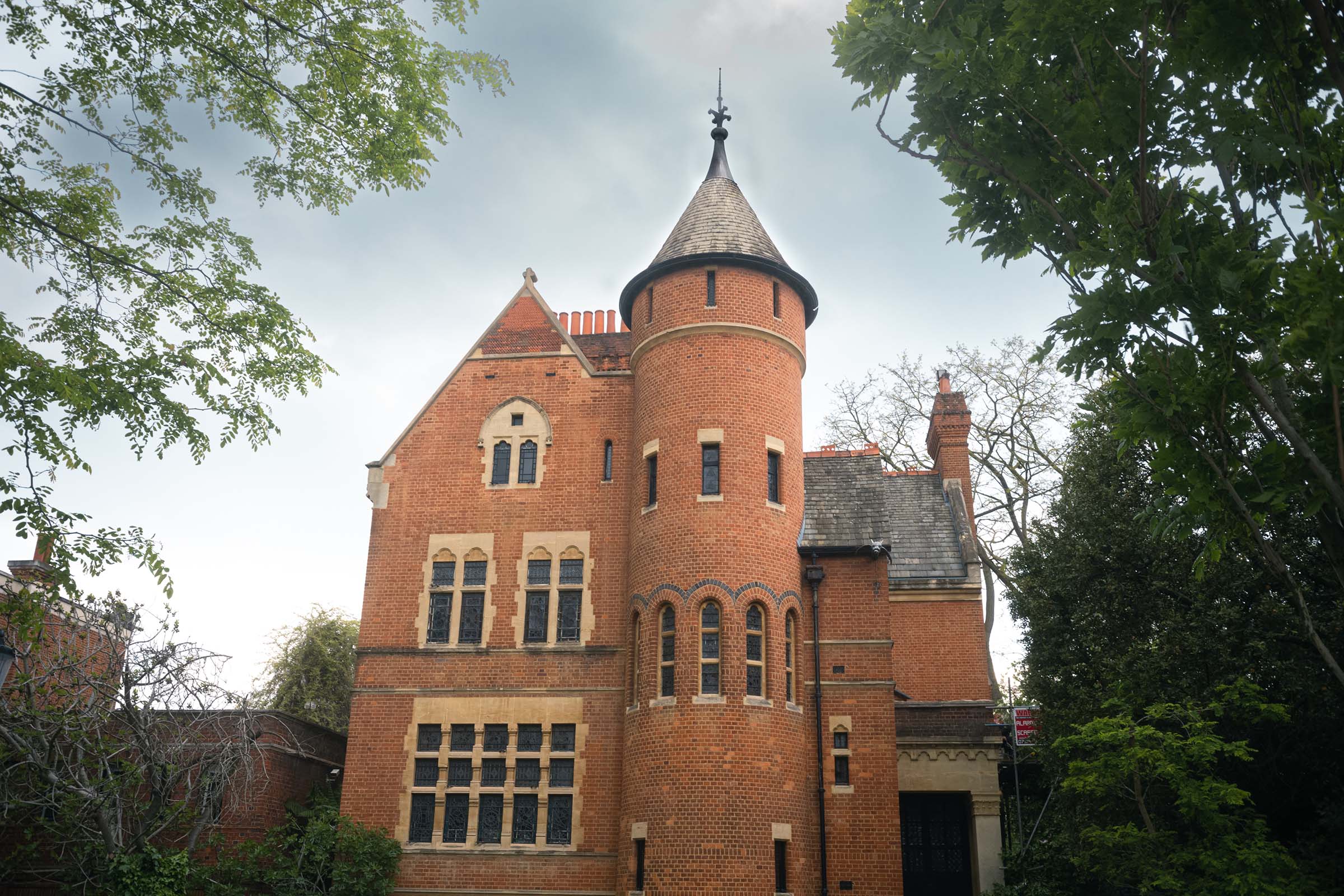
When a touch of middle-age spread in a brick gable turned into a worrying bulge, it was the personal trainers from Triskele Conservation who were called in to get this 400-year-old cottage back into shape.
Shepherd’s Cottage is a remarkable survivor. Dating from the 17th century and Grade II listed, it is the only surviving building of its period on the Highgate Bowl. But when its upper gable began moving in one direction and its chimney stack in another, its survival could no longer be taken for granted.
Investigation revealed that centuries of sulphurous fires had taken their toll on the masonry within the chimney. The internal withe walls were no longer properly keyed into the outer brickwork and the entire gable had begun to separate, producing an alarming outward bulge over the neighbouring property below.
Structural engineer Ed Morton of The Morton Partnership – where Triskele founder Conor Meehan had previously worked as an engineer – was called in to assess the problem. The first priority was simply to make the building safe. Triskele erected a scaffold specifically configured to shore and restrain the unstable wall while a conservation-led repair could be undertaken.
Then began the Battle of the Bulge.
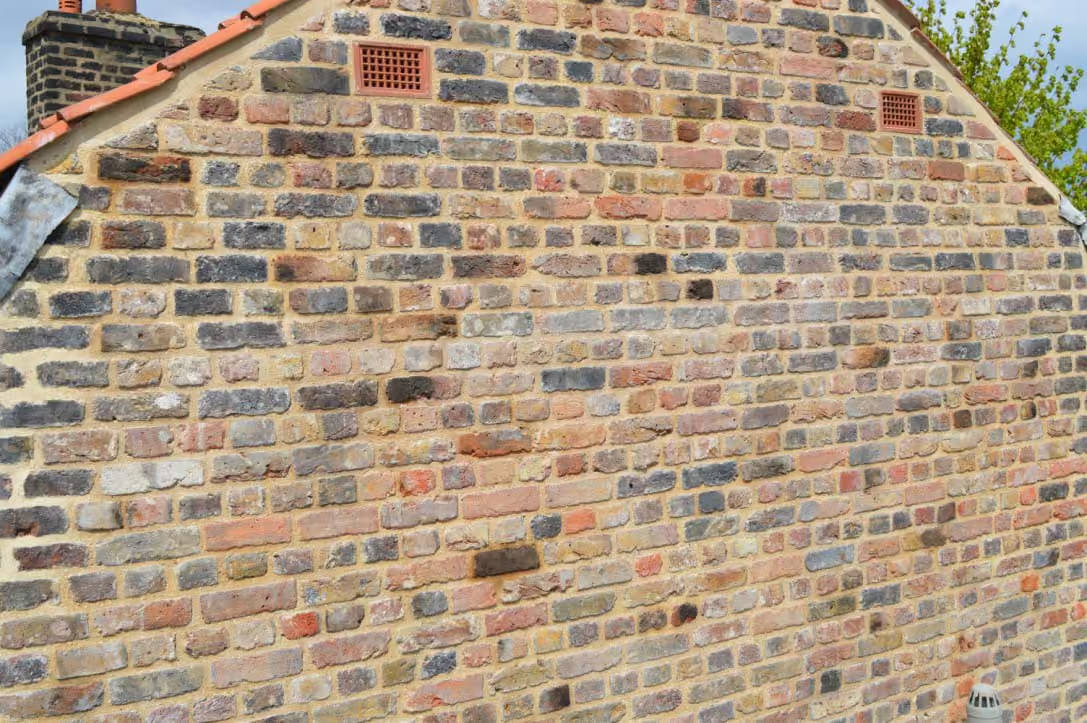
Working with master bricklayer Paul Slack, the unstable outer section of the gable was carefully dismantled by hand, brick by brick. As much of the original material as possible was salvaged, cleaned and reused, while the exposed inner masonry was retained.
The gable was then progressively rebuilt in English Bond using hot-mixed lime mortar, pargetting the chimney flues as the work rose. At each stage, the reconstructed outer masonry was carefully reconnected to the stable inner fabric using a combination of stainless-steel helical bars and ties, brick ties and stainless-steel mesh, effectively stitching the building back together layer by layer.
Even the mortar received forensic attention. Different sands and aggregates were trialled to reproduce the pale, chalky character of the existing work before a red sharp sand was selected to achieve the required colour and texture.
One historic chimney pot proved too fragile to return to the roof. Rather than simply buying a replacement, a new 32-inch London redware pot was commissioned from specialist potter Mick Pinner of West Meon Pottery. Hand-thrown in Wealden Gault clay, it was decorated with specially commissioned stamps commemorating the people and craft involved in saving the building.
The completed project was recognised with a Historic England Angel Award in 2017 for the rescue of Shepherd’s Cottage.
Four hundred years of movement, fire, weather and alteration had left their mark. The intention was never to erase those marks, but to make sure the cottage could carry them safely into its next chapter.
Scope of work
Emergency stabilisation of historic gable and chimney; temporary structural propping and restraint; specialist access and support scaffolding; careful dismantling of unstable historic brickwork; salvaging, cleaning and reuse of original handmade bricks; progressive rebuilding of gable in English Bond; structural stitching of outer masonry to stable inner fabric; repairs and reconstruction to historic chimney flues; pargetting to chimney flues; installation of stainless-steel helical reinforcement bars, brick ties and mesh reinforcement; lime mortar bedding and repointing; mortar trials and aggregate matching; conservation and reinstatement of historic chimney pots; commissioning and installation of bespoke hand-thrown chimney potk
Materials used
Salvaged original handmade bricks; matching reclaimed bricks where required; hot-mixed lime mortar; red sharp sand and carefully selected aggregates; stainless-steel reinforcement bars, brick and helical ties, mesh, screws and washers; traditional pargetting materials; Wealden Gault clay, hand-thrown in London redware form
Client type
Private residential
Duration
Two months


© Triskele Building and Conservation 2026